Falsities of LLM Negationists
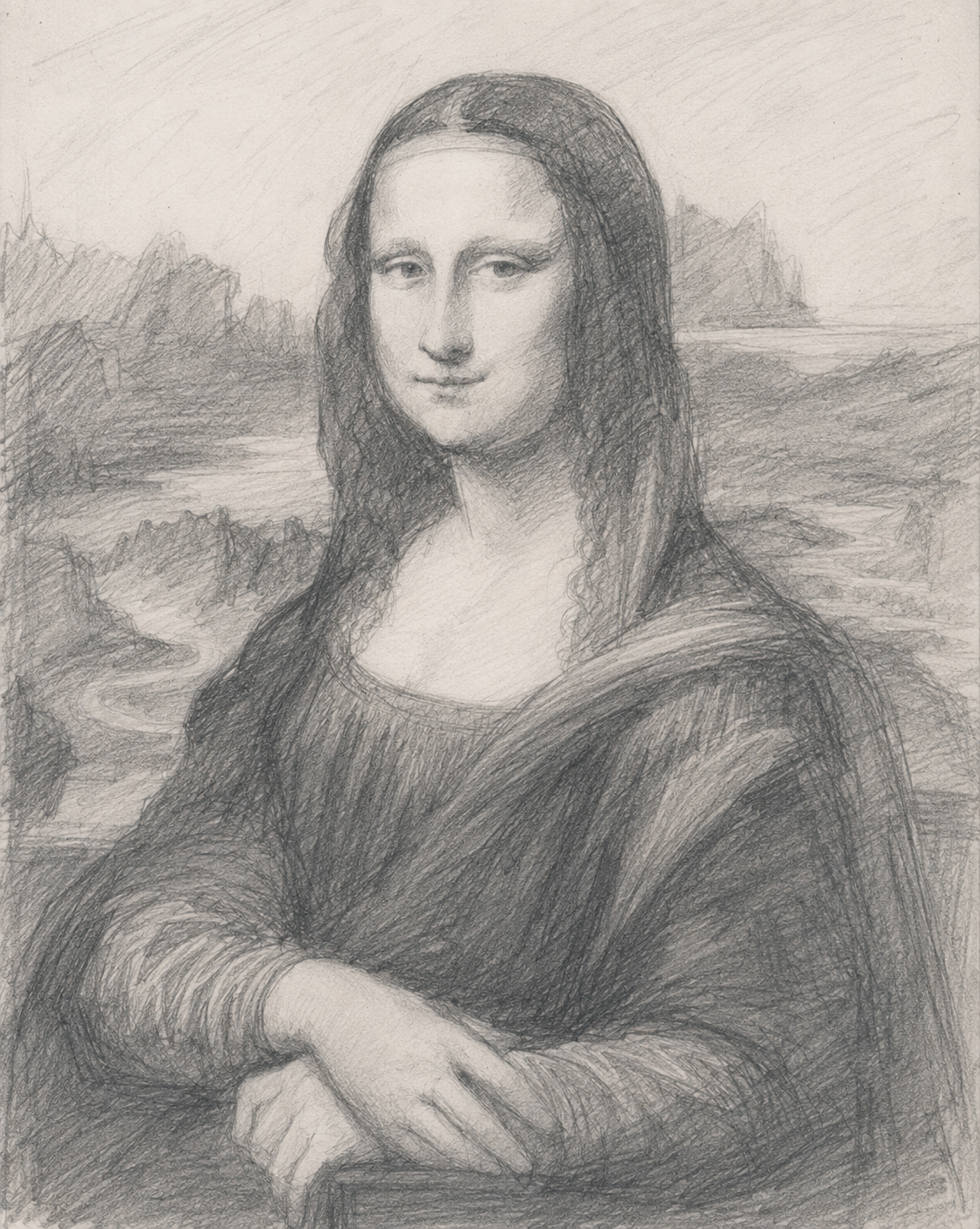
There is one claim about LLMs that irritates me more than all the discussions about prompting, AGI, and stochastic parrots combined: “We don’t know if it is yours”.
Sometimes the wording changes: “There might be a copyright owner out there”. “It may be public domain”. “We don’t know whether it can be copyrighted”.
A person spends a month building something.
They generate hundreds of outputs, most of them garbage. They rewrite prompts, edit results, combine fragments, throw entire approaches away, start over, and fix the same bug three times because the model confidently reintroduced it. Eventually, after thousands of decisions, they arrive at the thing they were trying to make.
Someone looks at the finished work and says:
“It isn’t yours”
The month disappears. The rejected attempts disappear. The selection, editing, arrangement, and judgment disappear. Nobody has identified another author. Nobody has pointed to an infringed work. Nobody has shown substantial similarity to anything.
The only contribution we can actually observe - the work of the human sitting behind the keyboard - is treated as the least credible fact in the case.
This is usually presented as caution. It is nothing of the sort.
Work which might not qualify for copyright protection is not evidence that the person did not create it. Whether some work components might be in the public domain does not mean that the composition is. Pointing out that unknown copyright owner might exist somewhere does not give that imaginary person a better claim than the actual author standing in front of us.
Yet this is exactly how the argument works. A possibility is raised; Author loses by default.
That default is dehumanizing in a precise sense. It treats the human as a non-significant operator while assigning all meaningful causation to the machine. Their choices count only when someone can prove, decision by decision, that the model did not somehow make them first. Selection becomes “curation”, revision becomes “cleanup”, composition becomes “prompting” and judgment becomes nothing at all.
We normally infer agency from sustained, directed action. A person forms an intention, rejects results that do not satisfy it, changes course, repairs failures, and stops when the work matches what they were trying to make. With an LLM, the same evidence is suddenly treated as presumptively irrelevant. The human must establish their personhood inside the process before their contribution is even considered.
This is more than scepticism about a tool. It reduces someone who acted, judged, and created to the role of a delivery mechanism for software. And it does so by default - not after showing that their contribution was trivial, but before examining it at all.
Imagine applying the same reasoning to photography; A photographer takes a remarkable photograph of the Eiffel Tower.
“It isn’t yours”
Why?
“The Eiffel Tower is in the public domain, and it dominates the photograph. Your picture may also resemble someone else’s photograph”
The tower may be in the public domain. The photograph is still a photograph made by someone. Framing, position, timing, light, exposure, and composition don’t go away just because the subject itself is not protected.
A photograph of the Mona Lisa may add almost nothing and deserve no independent protection. A carefully composed photograph of a public figure walking through a crowd may belong to the photographer. A photograph of another photographer’s print may merely reproduce the earlier work.
It’s not a camera that settles the question. The public-domain status of the subject does not settle it either. You have to examine what the photographer contributed.
Same is with music.
A musician can take fifty classical pieces, all comfortably in the public domain, and arrange them into something new. The notes may come from Bach, Chopin, or composers dead for several centuries. The arrangement can still be the work of the person who selected, transformed, ordered, and combined them.
Another musician can hear a protected pop song once, reproduce it perfectly from memory, and acquire no rights to the song at all.
The first musician used only public-domain material and may own copyright in the resulting arrangement. The second copied without touching a file.
Copyright does not follow a substance through every transformation like radioactive dye. It depends on the work before us: what was contributed, what was copied, and by whom.
This is why “the model contained copyrighted material” does not resolve the authorship of its output. Neither does “the model learned from public-domain works”. Those statements may matter when investigating training or infringement, but they do not tell us who made the final composition.
More importantly, public domain does not mean authorless.
A work can have an author while no longer being protected by exclusive economic rights. Its components can be public domain while their selection and arrangement are protected. An individual fragment may belong to nobody while the larger composition belongs to its author.
The phrase “it may be public domain” is therefore often used to smuggle in a completely different conclusion: that the person who assembled, edited, and shaped the work contributed nothing that can belong to them.
Such conclusion requires evidence. It cannot be extracted from the word may.
The same problem appears when people say that an LLM user merely issued instructions.
Sometimes that description is accurate. A person types one sentence, accepts the first output, and contributes almost nothing to its final form. There is no reason to pretend that every generated result has a human author merely because a human pressed Enter.
But that case tells us nothing about the person who spent a month selecting, rewriting, composing, repairing, and discarding.
The relevant question is what the person controlled in the final work. Did they merely request it, or did they make the decisions that gave it its particular form? Did they accept whatever appeared, or did they repeatedly transform it until it expressed their own choices?
All of these questions have answers but “An LLM was involved” is not one of them.
I find that that approach similar to conspiracy theories followers. Conspiracy theories rarely begin with invented evidence. They begin with uncertainty.
And thus the negationist argument begins to resemble conspiracy thinking: “We don’t know”, “There are unanswered questions”, “It hasn’t been disproved”.
The error comes when uncertainty stops marking the boundary of available evidence and starts functioning as evidence for the accusation.
“We don’t know whether the work is copyrightable” - Therefore, the person who made it owns nothing.
“We don’t know whether some part came from a protected work” - Therefore, an unknown third party probably owns it.
“Some of the material may be public domain” - Therefore, the composition belongs to nobody.
None of those conclusions follows.
When someone claims infringement, they should identify the earlier work and show what was copied. When someone claims that the human contribution is insufficient, they should examine that contribution. When someone claims that a composition belongs to nobody, they should explain why the selection, transformation, and arrangement do not qualify as creative work.
Instead, LLM negationists replace analysis with suspicion: Maybe it is copied. Maybe it is public domain. Maybe somebody else owns it. Maybe the human did not contribute enough.
Each possibility may justify a question. None justifies confiscating the answer in advance.
And confiscation is what this is. Copyright is not merely a certificate issued to impressive works. It is a set of rights held by an author. When a person has made a protected work, denying their contribution does not place the work into some philosophically neutral mist. It deprives an actual copyright owner of rights that belong to them.
The supposed caution always points in one direction. Nobody hesitates to invent a hidden photographer, writer, programmer, or corporation who may own the work. The hesitation appears only when discussing the person whose decisions produced the final result.
Ironically, the first victim of this reasoning is not Disney, Getty Images, or The New York Times.
It is the author sitting behind the keyboard.
Przemysław Alexander Kamiński
vel xlii vel exlee
Powered by hugo and hugo-theme-nostyleplease.